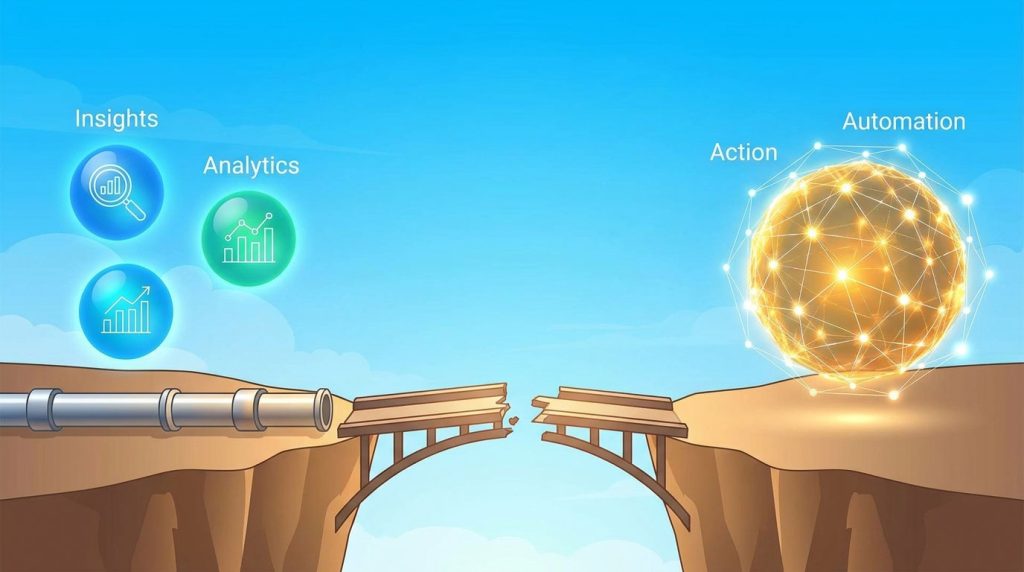
From Tool Chaos to Agentic Clarity: Rethinking VPN Health
Enterprise VPN health monitoring is harder than it should be.
Most enterprise VPN environments look something like this:
- 10+ VPN gateways
- Thousands of users depending on them
- Multiple VPN monitoring tools watching different parts of the stack
On paper, everything is “covered.”
In reality? VPN performance issues are still hard to diagnose.
Why VPN Monitoring Tools Fail in Enterprise Environments?
Your NetOps team is jumping between multiple VPN monitoring tools:
-
- ThousandEyes → packet loss, latency, jitter
- Cisco ASA → tunnels, sessions, firewall events
- Cisco ISE → authentication, user activity
- Splunk → logs from everywhere
Each tool is doing its job.
But no single place tells you what’s actually wrong.
So when something breaks, the flow usually looks like:
“Is this network? security? routing? auth? …let me check…”
And that’s where time is lost.
A Simple Example
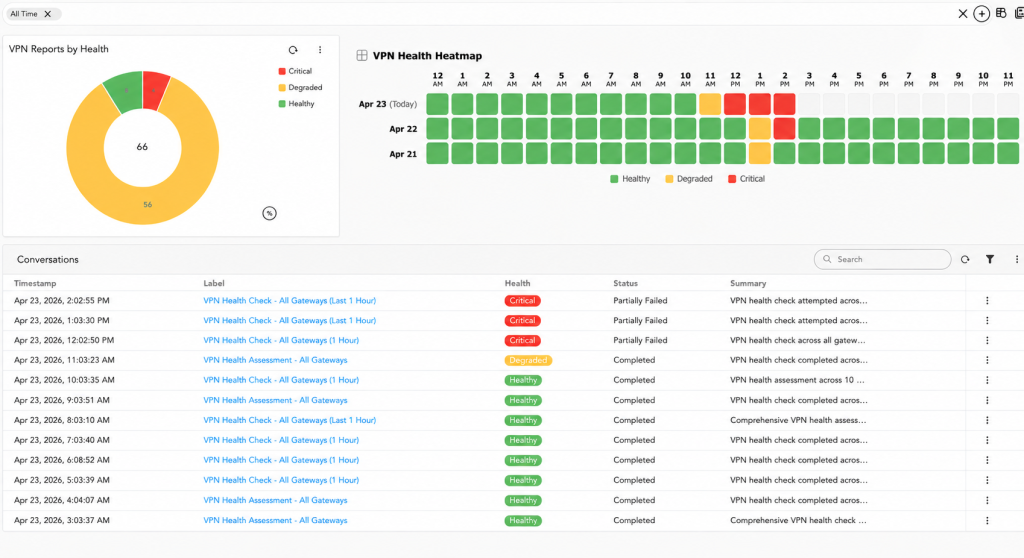
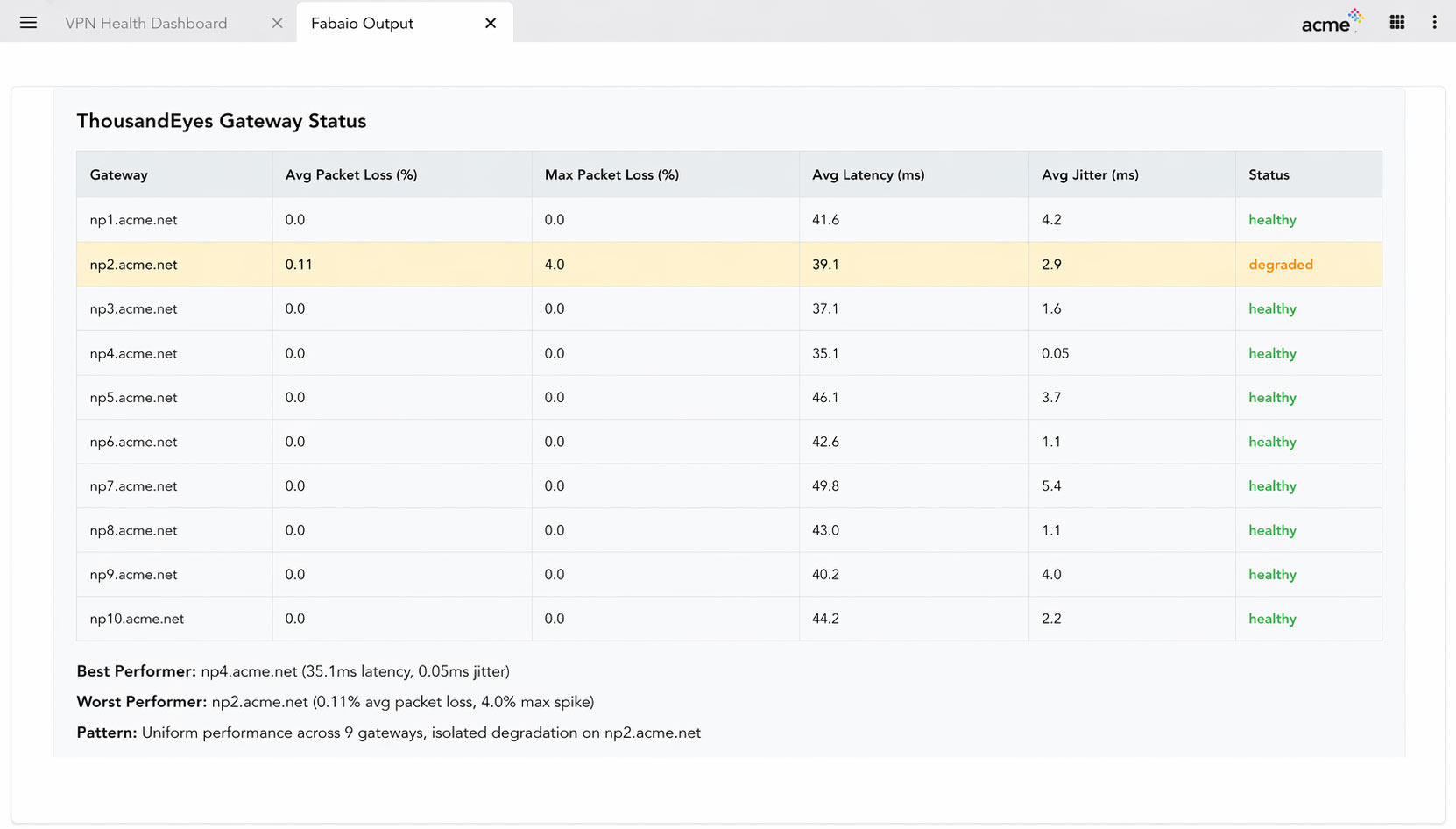
Let’s say one VPN gateway starts degrading — a common VPN performance issue.
-
- ThousandEyes shows packet loss
- BGP tests show route instability
- ASA looks fine
- ISE shows normal auth
Now what?
You’ve got signals… but no answer.
The Real Problem: VPN Data Isn’t Agent-Ready
But this data is rarely structured for AI-driven VPN health monitoring or troubleshooting.
Yes — data exists.
Yes — tools exist.
But…
Is your environment actually ready for AI agents to use it?
- Some vendors are starting to expose MCP servers
- Many are still catching up
- Even where MCP exists → tool coverage is limited
- New use cases often need new tools that don’t exist yet
So you end up with:
“We can access data… but not in a way AI agents can actually use end-to-end.”
Next Problem: Correlation Across Domains and VPN monitoring systems
Even if every tool had perfect MCP coverage…
You’d still face this:
-
- Network signals → ThousandEyes
- Security signals → ASA
- Identity signals → ISE
- Logs → Splunk
This is where most VPN troubleshooting workflows break down
That’s where most solutions stop.
AI Agents for VPN Health Monitoring: The Fabrix.ai Approach
Fabrix.ai doesn’t just connect tools.
It makes your environment fully agent-ready and orchestrates across domains.
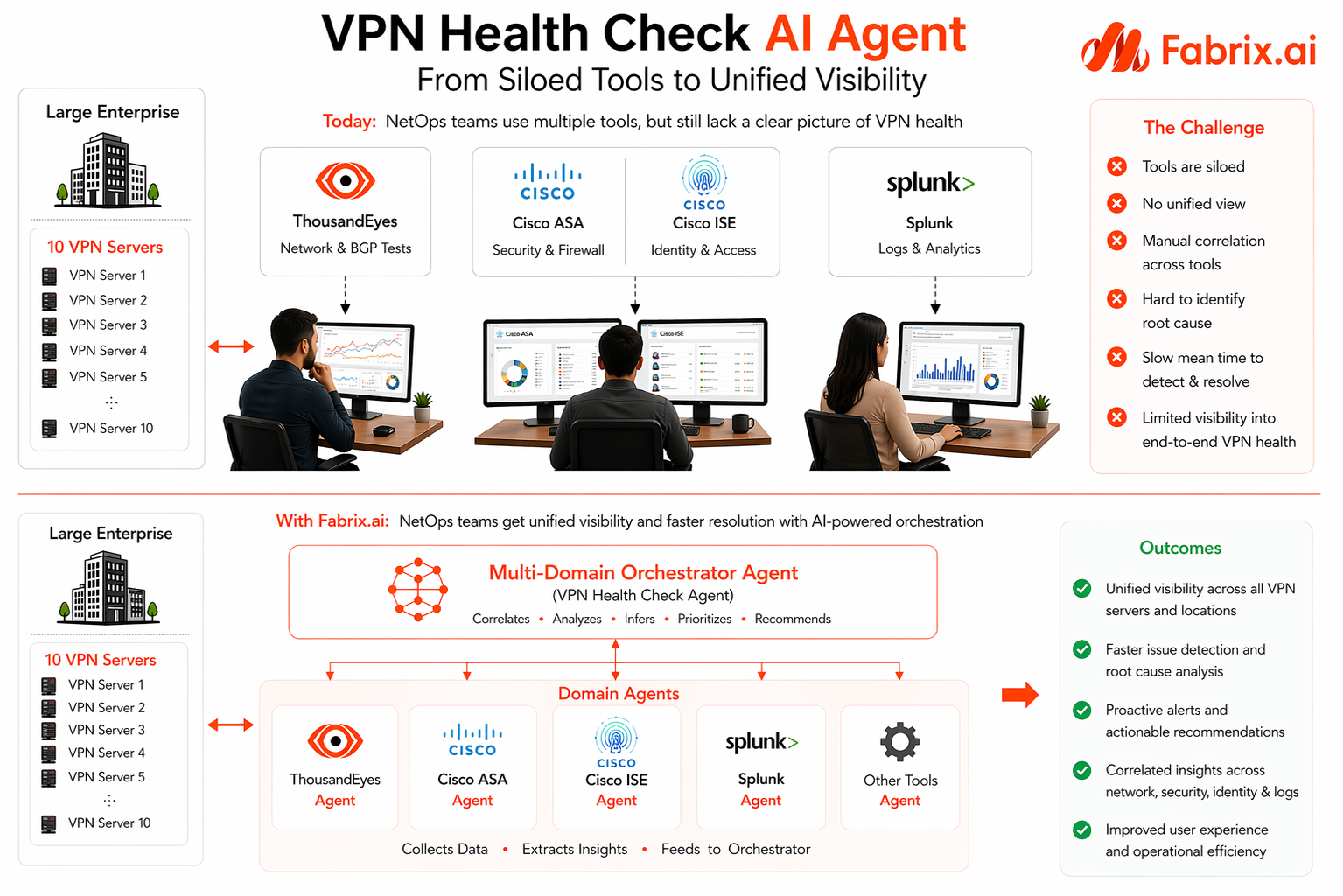
Layer 1: Domain Agents for VPN Monitoring Systems
For every system, Fabrix.ai gives you two paths:
These domain agents create an agentic layer on top of your enterprise systems — making your data and tools accessible and usable by AI agents.
Option A: Use Vendor MCP Servers (Where Available)
-
- Leverage vendor-provided MCP + tools
- Fast to get started
- Coverage improving, but still evolving
Option B: Fabrix.ai Universal MCP Server (Game Changer)
For everything else:
Fabrix.ai generates MCP toolsets for your systems
-
- YAML-driven configuration
- No coding required
- Works with any system (APIs, logs, pipelines, data sources)
- Instantly brings your tools into the agent ecosystem
The goal:
Every signal. Every system. Agent-accessible.
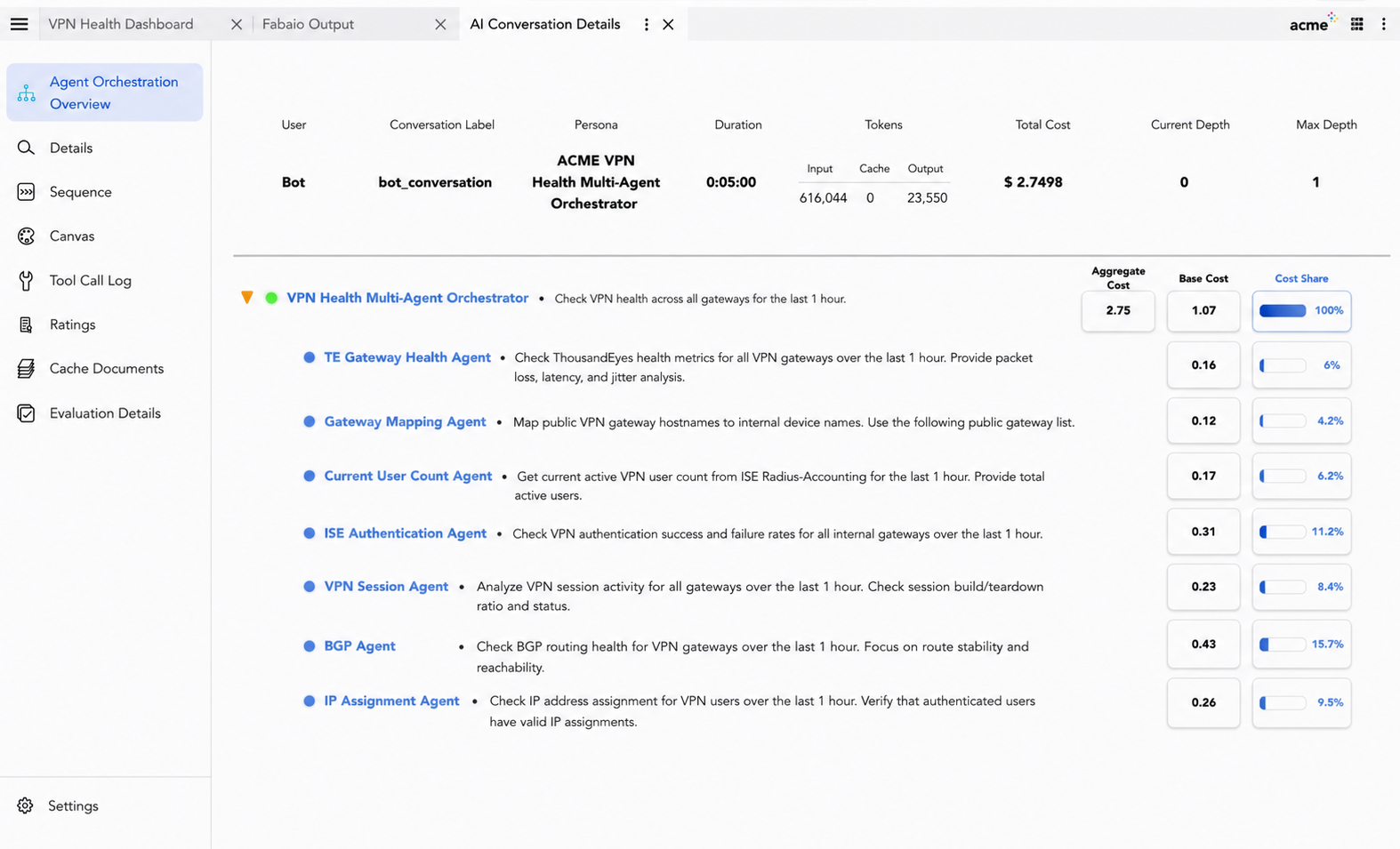
Layer 2: Multi-Domain Orchestrator
VPN Health Check Agent
This enables real-time VPN performance monitoring and automated root cause analysis.
This is where it all comes together.
-
- Correlates signals across domains
- Understands dependencies
- Identifies true root cause
- Prioritizes impact
- Recommends next steps
No more guesswork. No more tool-hopping.
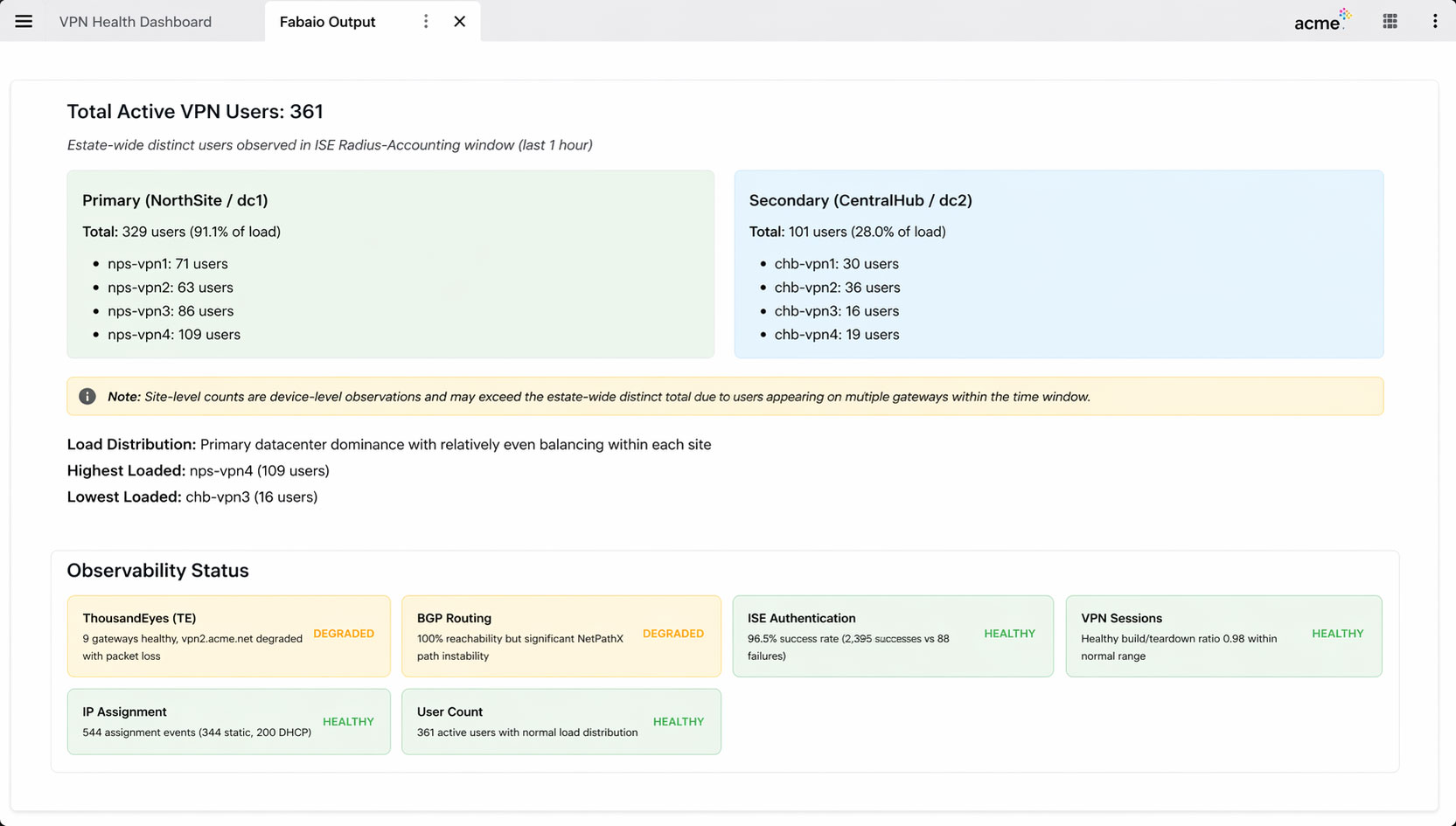
What You Actually Get
Instead of dashboards… you get answers from AI-driven VPN health monitoring
-
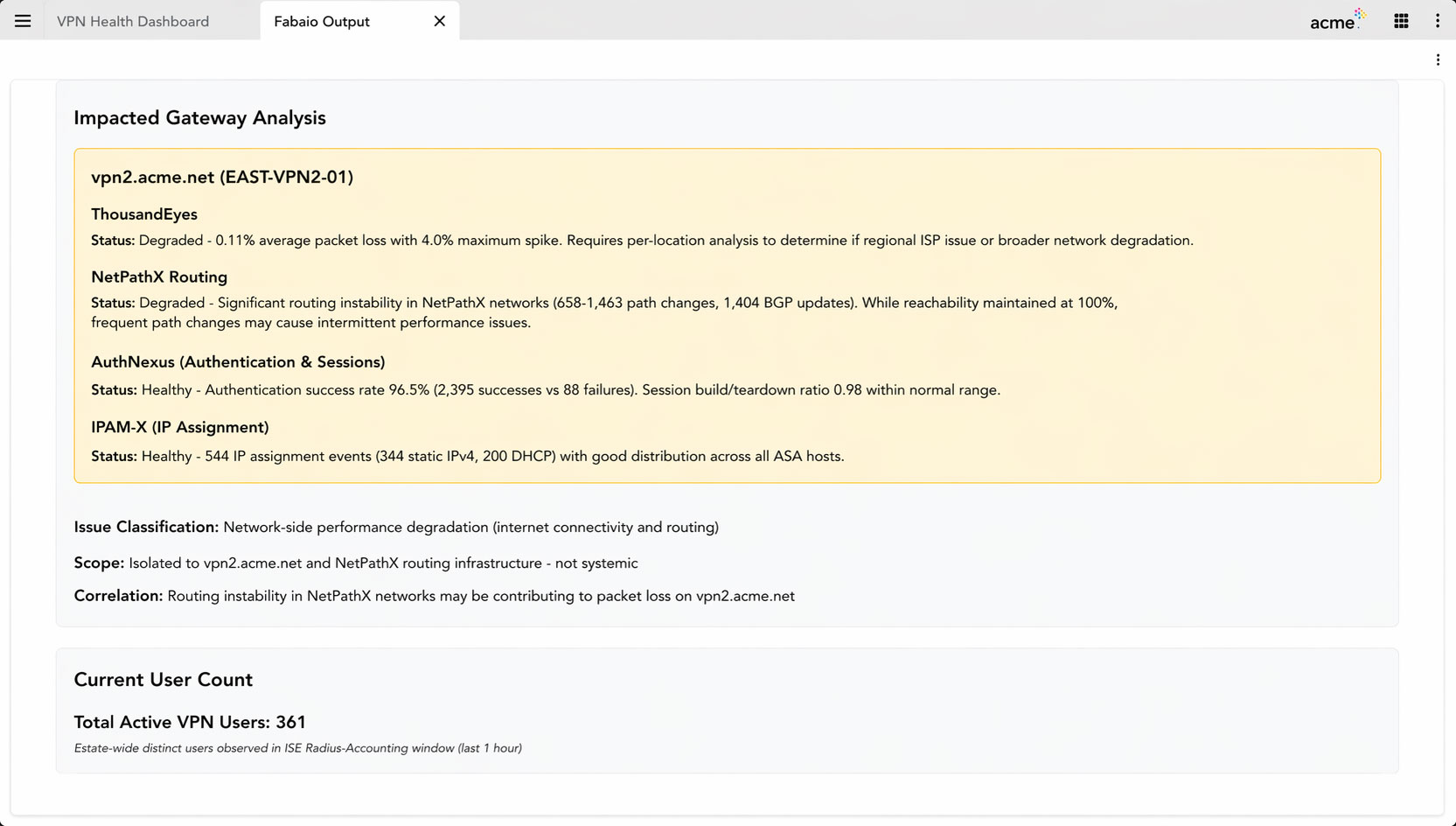
- “vpn2 is degraded due to packet loss”
- “Likely caused by BGP instability”
- “Auth and sessions are healthy”
- “Impact is localized, not systemic”
This is what modern VPN troubleshooting with AI agents looks like.
Why This Matters
This isn’t just about visibility — it’s about improving VPN performance and reducing downtime.
It’s about outcomes:
✅ Faster issue detection
✅ Clear root cause (not guesswork)
✅ Less swivel-chair debugging
✅ Better user experience
✅ Reduced MTTR
Your team spends time fixing issues, not chasing signals
The Bigger Shift
The industry is moving from: Tools → Integrations → Dashboards
To: Agent-Ready Systems → Multi-Domain Orchestration → Outcomes
That’s the layer most platforms are missing. That’s where Fabrix.ai fits.
See AI-Powered VPN Health Monitoring in Action
If this feels familiar (it usually does), you should see how this works in your environment – Request a Demo
We’ll walk through your VPN stack and show how Fabrix.ai enables AI-driven VPN monitoring, faster troubleshooting, and real-time root cause analysis.
FAQs
What is VPN health monitoring?
VPN health monitoring involves tracking latency, packet loss, jitter, and routing stability across VPN gateways.
Why do VPN monitoring tools fail?
Most VPN monitoring tools operate in silos and don’t correlate signals across network, security, and identity systems.
How do AI agents improve VPN troubleshooting?
AI agents correlate signals across tools, identify root cause, and recommend actions automatically.